30th May 2026
Hair transplantation has become one of the most effective solutions for permanent hair restoration. However, one of the most common questions patients ask is:
he good news is that modern hair transplant procedures such as FUE (Follicular Unit Extraction) and FUT (Follicular Unit Transplantation) have a high success rate when performed by an experienced surgeon.
In this guide, we’ll discuss the average hair transplant success rate, factors that influence results, recovery expectations, and how you can maximize the success of your procedure.
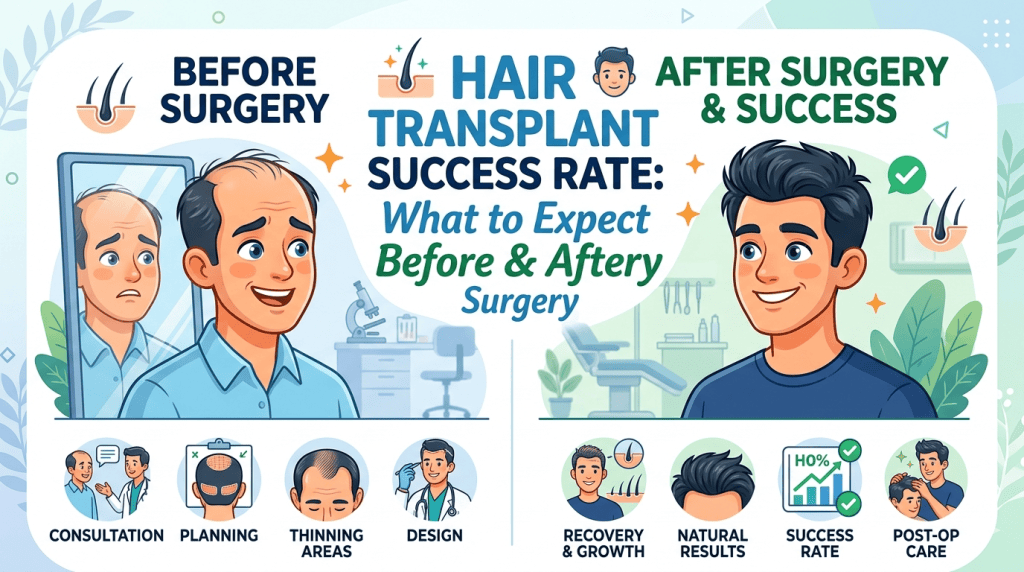
What Is the Success Rate of a Hair Transplant?
Most reputable clinics report a 90% to 95% graft survival rate after a properly performed hair transplant.
This means that out of every 100 transplanted hair follicles, approximately 90–95 follicles successfully grow in the recipient area.
| Procedure | Average Success Rate |
|---|---|
| FUE Hair Transplant | 90%–95% |
| FUT Hair Transplant | 90%–95% |
| Beard Hair Transplant | 85%–95% |
| Eyebrow Hair Transplant | 80%–90% |
When performed correctly, both FUE and FUT can provide natural-looking, long-lasting results.
What Determines Hair Transplant Success?
Several factors influence whether a hair transplant achieves optimal results.
1. Surgeon’s Experience
The skill of the surgeon is one of the most important factors affecting graft survival.
An experienced surgeon can:
- Design a natural hairline
- Minimize follicle damage
- Ensure proper graft placement
- Improve density and coverage
2. Quality of Donor Hair
The donor area is usually located at the back and sides of the scalp. In general, patients with thick hair and strong donor density tend to achieve better outcomes. Furthermore, healthy donor follicles can improve graft survival and overall hair density.
Patients with:
- Thick hair
- Strong donor density
- Healthy scalp condition
often achieve better outcomes.
3. Number of Grafts Transplanted
The success of a hair transplant also depends on using the appropriate number of grafts.
Typical requirements include:
| Hair Loss Level | Approximate Grafts Needed |
|---|---|
| Mild Hair Loss | 1000–2000 |
| Moderate Hair Loss | 2000–3500 |
| Advanced Hair Loss | 3500–5000+ |
A proper graft calculation helps ensure natural density.
4. Post-Operative Care
Following your surgeon’s instructions is critical.
Patients should:
- Avoid touching grafts
- Sleep with head elevated
- Avoid smoking
- Avoid alcohol temporarily
- Follow prescribed medications
Poor aftercare can reduce graft survival.
5. Overall Health
Medical conditions such as:
- Diabetes
- Thyroid disorders
- Autoimmune diseases
may affect healing and hair growth.
Hair Transplant Recovery Timeline
Understanding the recovery process helps set realistic expectations.
Week 1
- Mild redness and swelling
- Tiny scabs around grafts
- Healing begins
Weeks 2–4
During weeks 2–4, many transplanted hairs begin to shed. This process, known as shock loss, is completely normal. However, patients should not panic because new growth usually starts within a few months.
Months 3–4
At this stage, early hair growth usually begins to appear. Initially, the new hairs may look thin and fine, but this is a normal part of the growth cycle.
Months 6–8
By this time, most patients notice a significant improvement in hair density. Furthermore, the transplanted hairs gradually become thicker and stronger.
Months 12–18
Finally, the full results of the procedure become visible. In most cases, patients achieve maximum density and a more natural-looking appearance.
What Is Graft Survival Rate?
Graft survival rate refers to the percentage of transplanted follicles that successfully grow hair.
For example:
- 3000 grafts transplanted
- 2850 grafts survive
Success rate:
95% graft survival
A higher graft survival rate generally produces fuller and denser results.
Can a Hair Transplant Fail?
Although uncommon, hair transplant failure can occur.
Common reasons include:
Poor Surgical Technique
Incorrect graft extraction or placement may damage follicles.
Inexperienced Clinic
Low-cost clinics with unqualified technicians often produce poor outcomes.
Inadequate Donor Area
Limited donor hair can affect coverage and density.
Failure to Follow Aftercare Instructions
Scratching, smoking, or excessive sweating during recovery may affect results.
How Long Do Hair Transplant Results Last?
Hair transplanted from the donor area is generally resistant to the hormone DHT, which causes male pattern baldness.
As a result:
- Transplanted hairs are usually permanent
- Results can last decades
- Many patients enjoy lifelong improvement
However, existing non-transplanted hair may continue thinning over time.
Your doctor may recommend medications such as minoxidil or finasteride to preserve native hair.
How to Improve Hair Transplant Success Rate
To maximize results:
Before Surgery
- Choose a qualified hair transplant surgeon
- Stop smoking if possible
- Control medical conditions
- Follow pre-operative instructions
After Surgery
- Follow all aftercare guidelines
- Take prescribed medications
- Avoid direct sun exposure
- Maintain a healthy diet
- Attend follow-up appointments
Frequently Asked Questions (FAQs)
Is a hair transplant 100% successful?
No procedure guarantees 100% success. However, modern techniques often achieve graft survival rates of 90–95%.
How many grafts survive after a hair transplant?
Most patients retain approximately 90–95% of transplanted grafts when the procedure is performed correctly.
When will I see full hair transplant results?
Most patients see significant improvement by 6–8 months and final results within 12–18 months.
Can transplanted hair fall out again?
Temporary shedding is normal during the first few weeks. Once new growth appears, transplanted hair is generally permanent.
Is FUE more successful than FUT?
Both procedures have comparable success rates when performed by experienced surgeons.
Conclusion
The average hair transplant success rate ranges from 90% to 95%, making it one of the most effective long-term solutions for hair loss. Success depends on factors such as surgeon expertise, donor hair quality, graft handling, and proper post-operative care.
Patients who choose an experienced clinic and follow recovery instructions carefully can expect natural-looking, permanent results that significantly improve both appearance and confidence.