9th October 2026
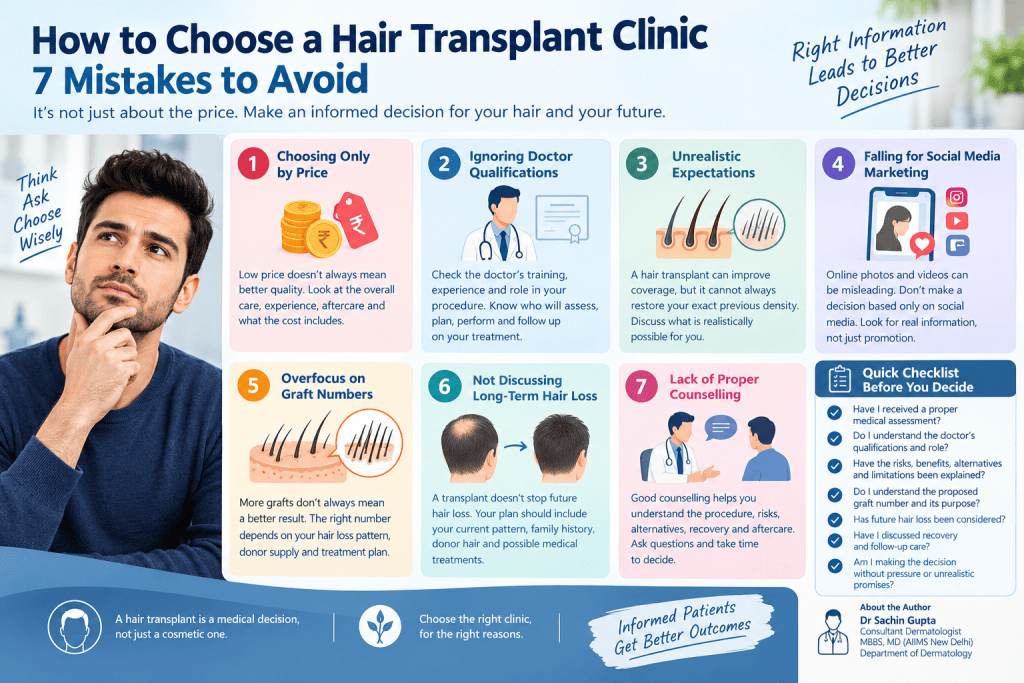
Choosing a hair transplant clinic is an important decision that can influence not only the immediate procedure but also your long-term hair restoration plan. With so much information available online, patients may find it difficult to distinguish realistic medical advice from attractive marketing messages. Some focus mainly on price, while others compare clinics by the number of grafts offered or the appearance of before-and-after photographs. However, a hair transplant is a medical procedure, and its suitability depends on several factors, including the pattern of hair loss, donor hair availability, scalp health, expectations, and future hair loss. Understanding common hair transplant mistakes can help patients make more informed decisions before committing to treatment.
1. Choosing a Clinic Based Only on Price
Cost is a reasonable consideration when planning a hair transplant. However, selecting a clinic solely because it offers the lowest price may mean overlooking important questions about medical assessment, surgical planning, aftercare, and the qualifications of the treating team. A very expensive procedure does not automatically guarantee a better outcome either. Instead of comparing prices alone, ask what the quoted fee includes, who will perform the procedure, what follow-up care is available, and whether the proposed treatment is appropriate for your needs. The aim should be to understand the overall quality and safety of care—not simply to find the lowest or highest price.
2. Ignoring the Doctor’s Qualifications and Role
A hair transplant requires careful assessment and medical decision-making. The doctor’s training, experience, and involvement in the procedure are therefore important considerations. Before choosing a clinic, ask: What are the treating doctor’s qualifications and relevant experience? Who will assess your hair loss and scalp condition? Who will design the hairline and develop the treatment plan? Who will perform the surgical steps, and who will supervise them? Who will manage complications or concerns after the procedure? A clear explanation of each team member’s responsibilities helps patients understand how their care will be delivered.
3. Having Unrealistic Expectations
A hair transplant can improve hair coverage in suitable candidates, but it cannot always restore the exact density or hairline a person had earlier in life. The outcome depends on several individual factors, including donor hair supply, the size of the thinning area, hair characteristics, ongoing hair loss, and healing. During consultation, discuss what improvement may realistically be possible in your case. Ask about limitations as well as potential benefits. A responsible treatment plan should explain what the procedure may achieve without promising a perfect result or guaranteed density.
4. Relying Only on Social Media Marketing
Social media can help patients learn about hair restoration, but promotional content should not replace an individual medical consultation. Photographs, videos, testimonials, and online reviews may provide useful context, but they do not tell the whole story. Lighting, camera angles, hairstyle, hair length, and the timing of photographs can affect how results appear. When reviewing clinical photographs, ask whether they represent comparable cases, whether the images were taken under similar conditions, and how long after treatment the results were recorded. Be cautious of claims such as “guaranteed results,” “permanent full density for everyone,” or pressure to book immediately. The goal is to evaluate evidence and medical advice rather than make a decision based on emotional or promotional messaging.
5. Focusing Too Much on the Number of Grafts
Patients often compare clinics by asking how many grafts they can receive. Although graft numbers matter for treatment planning, a higher number does not automatically mean a better result. A graft may contain one or more hair follicles. The number of grafts needed depends on the area being treated, existing hair, desired coverage, donor supply, and the planned distribution of hair. A treatment plan that focuses only on maximising graft numbers may not adequately consider the appearance of the hairline or the preservation of donor hair. Ask your doctor why a particular graft estimate is being recommended and how the grafts will be distributed across the treatment area.
6. Not Discussing Future Hair Loss
A hair transplant redistributes existing hair follicles; it does not stop the underlying process of hair loss. For some patients, native hair may continue to thin after the procedure. Without appropriate long-term planning, this can lead to changes in density or an uneven appearance between transplanted and non-transplanted areas. A consultation should consider your current pattern of hair loss, family history, donor capacity, and the possibility of future progression. Your dermatologist may also discuss suitable medical treatments to help manage ongoing hair loss, depending on your diagnosis and individual circumstances. Planning for the future is important because donor hair is limited and may need to be preserved for later needs.
7. Overlooking Proper Counselling
A consultation should be more than a discussion of price, graft numbers, and the date of surgery. Patients should have an opportunity to discuss their concerns, medical history, expectations, alternatives, possible complications, recovery, and aftercare. Useful questions include: Am I a suitable candidate for a hair transplant? Are non-surgical treatments worth considering first? What are the possible risks and limitations? What should I expect during recovery? When might I begin to notice growth? What follow-up care will I need? What happens if my hair loss continues? Good counselling gives patients the information and time they need to make a voluntary, informed decision.
A Practical Checklist Before Choosing a Hair Transplant Clinic
Before proceeding, consider whether you can confidently answer the following questions: Have I received an appropriate medical assessment? Do I understand the doctor’s qualifications and role? Have the risks, benefits, alternatives, and limitations been explained? Do I understand the proposed graft number and its purpose? Has future hair loss been considered? Have I discussed recovery and follow-up care? Am I making the decision without pressure or unrealistic promises? If important questions remain unanswered, it is reasonable to seek further clarification or another medical opinion before proceeding.
Final Thoughts
Knowing how to choose a hair transplant clinic involves looking beyond price, advertising, and graft numbers. Medical qualifications, individual assessment, realistic expectations, donor hair preservation, and long-term planning all deserve careful consideration. A hair transplant is a personal medical decision. Take time to understand your options, ask questions, and choose a treatment plan based on your individual needs rather than promotional promises. Informed decisions begin with clear information, realistic expectations, and a conversation with a qualified medical professional.