Numbness in leprosy can improve if treated early. Learn causes, nerve damage, MDT treatment, and recovery options in simple terms.
Introduction
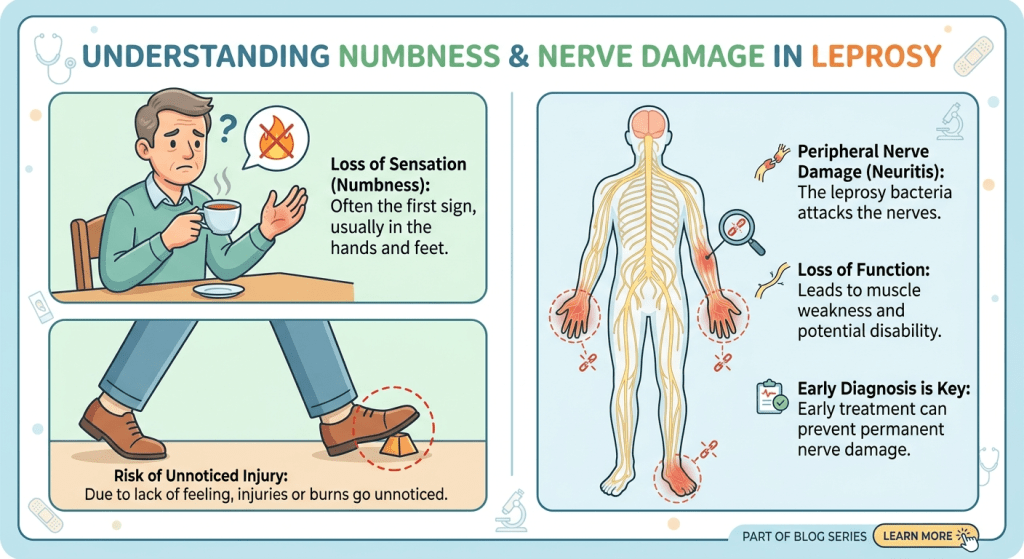
Numbness in leprosy is one of the most common and concerning symptoms. Many patients complete their treatment but still experience numbness, weakness, or deformities.
So the big question is:
Does numbness in leprosy go away completely?
Let’s understand this in a simple way.
What Happens in Leprosy?
Leprosy is caused by a bacterium called Mycobacterium leprae. It mainly affects:
- Skin
- Nerves
These nerves help you feel:
- Touch
- Pain
- Temperature (hot/cold)
When nerves are affected, they get inflamed and damaged, leading to numbness.
Why Does Numbness Occur?
1. Direct Nerve Damage
The bacteria directly attack and damage nerves, causing:
- Loss of sensation
- Muscle weakness
2. Immune Reaction
Sometimes, the body’s immune system reacts strongly, causing:
- Swelling in nerves
- Pressure on nerves
- Numbness or paralysis
Common Symptoms of Nerve Damage
- Numb patches on skin
- Loss of sensation
- Muscle weakness
- Wrist drop
- Foot drop
- Eyelid weakness
Will Numbness Go Away?
Short Answer: It Depends
If Treatment Started Early
- Nerve damage is mild
- Numbness can improve or recover
If Treatment Started Late
- Nerve damage becomes permanent
- Numbness may not fully go away
Once a nerve is severely damaged, recovery becomes difficult.
Role of MDT Treatment (Multi Drug Therapy)
MDT is the main treatment for leprosy.
What MDT Does:
- Kills bacteria completely
- Stops disease progression
What MDT Does NOT Do:
- Cannot always reverse nerve damage
That’s why early diagnosis is very important.
Important Warning
Never stop MDT treatment early.
Even if you don’t see improvement:
- The bacteria are still being killed
- Stopping treatment can worsen the disease
Treatment Options for Nerve Damage
1. Steroid Therapy (e.g., Prednisolone)
Used when nerves are inflamed.
Helps reduce swelling and improve nerve function.
2. Local Steroid Injections
- Given near affected nerves
- Helps reduce localized inflammation
3. Surgery (Nerve Decompression)
Used in severe cases with nerve swelling or abscess.
Relieves pressure on nerves.
4. Reconstructive Surgery
Used for permanent deformities like:
- Clawed fingers
- Wrist drop
- Foot drop
- Facial deformities
Helps improve function and appearance.
5. Physiotherapy
- Strengthens muscles
- Improves movement
- Prevents stiffness
Regular physiotherapy is very important.
Key Takeaways
- Leprosy is 100% curable with proper treatment
- Numbness depends on how early treatment starts
- Early treatment gives better recovery
- Severe nerve damage may be permanent
- Never stop treatment midway
- Physiotherapy and surgery can improve quality of life
Conclusion
Numbness in leprosy is not always permanent, but recovery depends on early treatment.
Even if numbness does not fully go away, treatments like steroids, surgery, and physiotherapy can help you live a normal and active life.
About the Author – Dr Sachin Gupta
Dr Sachin Gupta is a dermatologist experienced in treating skin and nerve-related diseases, including leprosy. He focuses on early diagnosis, MDT treatment, and prevention of complications.