25th September 2026

A hair transplant is a gradual process. The procedure may be completed in a day, but the transplanted hair needs time to settle, shed, and grow. Knowing what happens during each stage of hair transplant recovery can make the process easier and reduce unnecessary anxiety.
What Happens Immediately After a Hair Transplant?
During the first few days, the scalp may feel sensitive, tight, swollen, or slightly uncomfortable. Small scabs or crusts can develop around the transplanted grafts. Your doctor will provide specific instructions about washing, sleeping position, medications, and scalp care. Following these instructions is important for proper recovery.
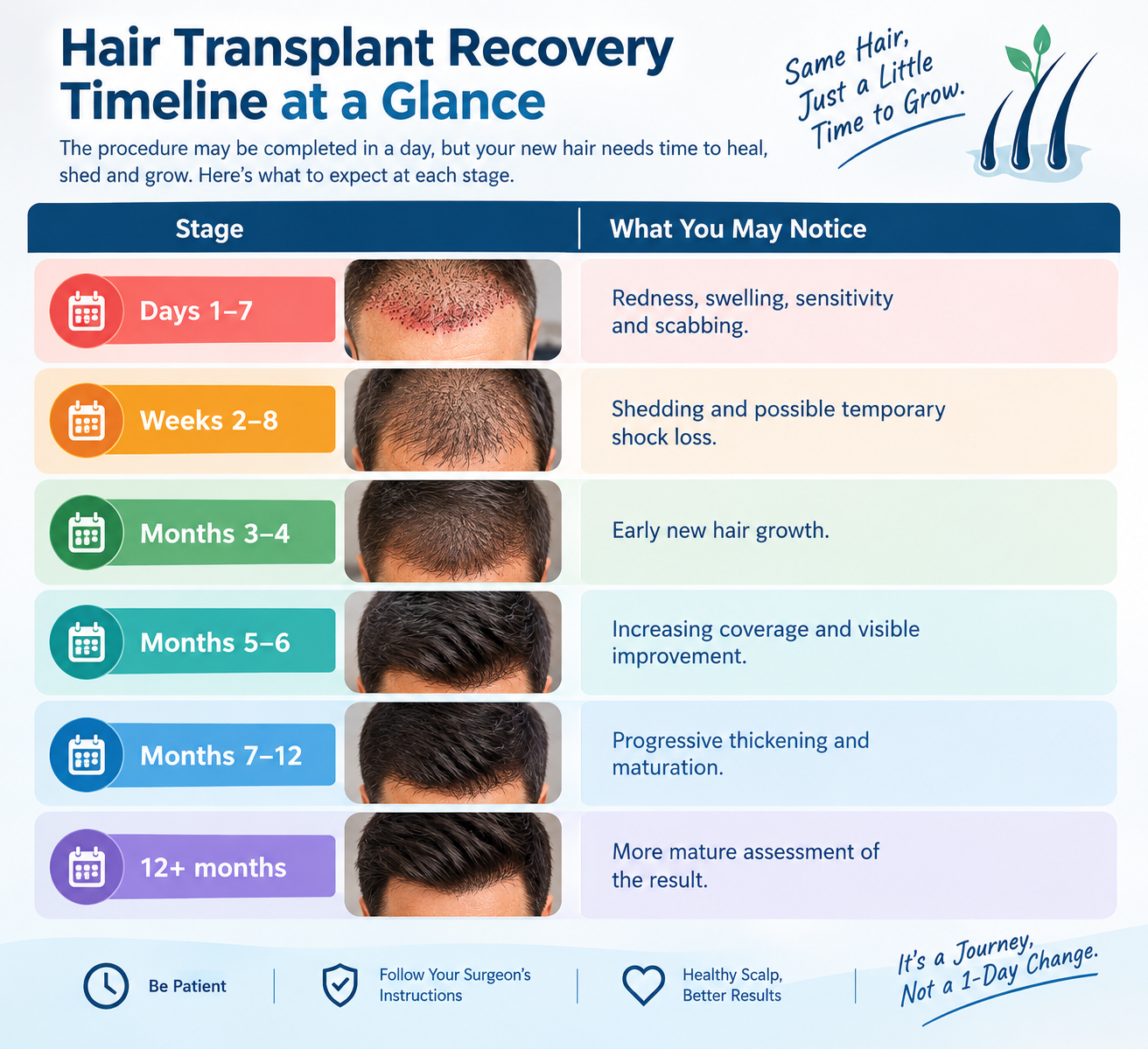
Days 1–7: Early Recovery and Scabbing
During the first week, small scabs around the transplanted follicles are common.You may notice: Mild redness or swelling; small scabs around grafts; scalp sensitivity; mild itching; temporary tightness or discomfort. Avoid scratching or picking the scalp. Gentle washing should be performed according to your surgeon's instructions.
Weeks 2–8: Shedding and Shock Loss
One of the most confusing stages of hair transplant recovery is shedding.The transplanted hair shafts may fall out during the early weeks while the follicles remain in the scalp. This is commonly known as shock loss or the shedding phase.Seeing hair fall during this period does not necessarily mean that the transplant has failed. The follicle can remain healthy beneath the skin and later enter a new growth cycle. Some existing native hair can also temporarily shed around the treatment area.
Months 3–4: Early Regrowth
Around the third or fourth month, new growth may begin to become noticeable. Initially, the new hairs can be fine, light, uneven, and slow-growing. This is normal. Hair growth does not happen simultaneously from every follicle, so the result can look patchy during the early stage.
Months 5–6: Visible Improvement
As more transplanted follicles begin producing hair, coverage and density gradually improve. The hair may still be thinner than the final result, but changes can become increasingly noticeable during this stage. Patience is important because hair follicles have individual growth cycles
Months 7–12: Progressive Growth
Between approximately 7 and 12 months, many patients see significant improvement in density, coverage, and hair appearance. The hair generally becomes longer, thicker, and easier to style. The exact timeline varies depending on individual healing, hair characteristics, the treatment area, and other factors.
When Will the Final Result Be Visible?
Hair transplant results are gradual rather than immediate. Many patients see substantial improvement during the first year, while further maturation can continue beyond 12 months. The exact timing depends on the individual and the procedure performed. Your surgeon can provide a more personalised timeline based on your treatment.
Exercise and Work After Hair Transplant
Returning to normal activities depends on the procedure and your surgeon's instructions. Generally, patients may need to temporarily modify: Heavy exerciseIntense sweatingSwimmingActivities involving dust or physical contact, and tight headwear. Your surgeon should tell you when each activity can safely be resumed. For office-based work, many people can return relatively quickly, but visible redness or swelling may influence when they feel comfortable returning.
Common Anxiety During Recovery
The recovery period can sometimes be emotionally challenging because the appearance of the scalp changes before the final result becomes visible.
Common concerns include:
“Why are my transplanted hairs falling out?”
Shedding can be part of the normal growth cycle after transplantation.
“Why don't I see new hair yet?”
Hair follicles need time to enter their growth phase.
Why does my hair look uneven?”
Early growth is often irregular, and different follicles grow at different rates.
“Did my transplant fail?”
It is usually too early to judge the final outcome during the initial recovery stages.If you notice unusual pain, increasing redness, significant swelling, pus, fever, or other concerning symptoms, contact your treating medical team rather than relying on online information.
The Most Important Thing: Be Patient
A hair transplant is a process, not an instant transformation. The scalp needs time to heal, transplanted hairs may shed, and new growth develops gradually. Comparing your recovery with someone else's can also create unnecessary worry because every patient has a different growth cycle. Follow your surgeon's post-procedure instructions, attend recommended follow-ups, and give your hair enough time to grow.
Final Takeaway
The hair transplant timeline can include healing, scabbing, shedding, shock loss, early regrowth, and gradual thickening. Temporary changes during recovery do not always represent the final result.
Good hair restoration requires patience. The goal is not just to recover quickly, but to allow the transplanted follicles to grow and mature naturally over time.