26th November 2026
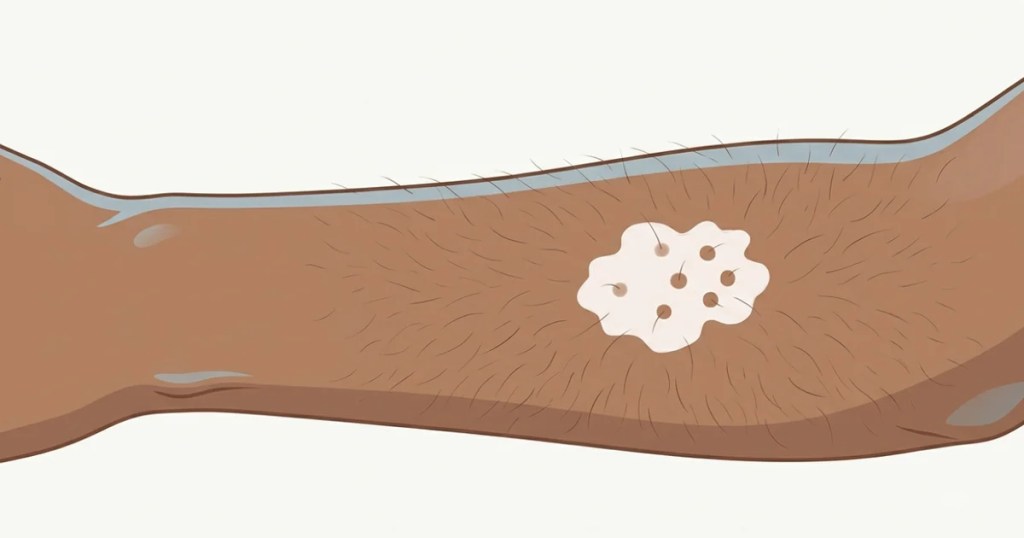
“Doctor, the treatment is going on regularly. I’m applying the cream regularly. And still a new patch has appeared.”
Behind this is always the same question: has the treatment failed?
Often it has not. But to see why, it helps to know something that is rarely explained — vitiligo treatment has two different goals, and they are judged in different ways.
If you are new to the condition, start with my guide to what vitiligo is and why it happens.
Two different goals
Goal one is control of disease activity. Fewer new patches. Existing patches not enlarging.
Goal two is repigmentation. Colour returning into patches that are already there.
These are not the same thing, and they are not measured the same way.
In many patients, signs of control appear before much colour returns. That is a common pattern, but it is not a rule. The two can overlap — some people begin to show small areas of repigmentation while disease activity is still settling, and occasionally colour returns in one area while another is still active.
What follows from this is practical: judging treatment on colour alone, and judging it early, gives a misleading answer.

Why a new patch can appear after starting treatment
If vitiligo was active when treatment began — new patches forming, old ones enlarging — that activity does not switch off on the day the medicine starts. It settles over time.
So a new patch appearing soon after starting treatment does not by itself mean the medicine is not working, and is not on its own a reason to change treatment.
It is still worth reporting. Where and how quickly new patches appear is useful information at review.
Why colour takes time
Repigmentation is a slow biological process:
- Melanocytes have to be stimulated
- They have to start producing melanin
- Only then does visible pigment appear
This generally takes months rather than weeks. How long varies with the site, the type of vitiligo and the treatment used.
What I look at during follow-up
At review I am not only looking at whether the patch is still white. I am looking at:
- Have the old patches enlarged?
- Have new patches appeared?
- Has pigmentation started in the old patches?
Early repigmentation is easy to miss. It often appears as small dots of pigment around hair follicles within the patch, or as colour moving in from the edge of the patch. Patients frequently do not notice these. They are encouraging signs.
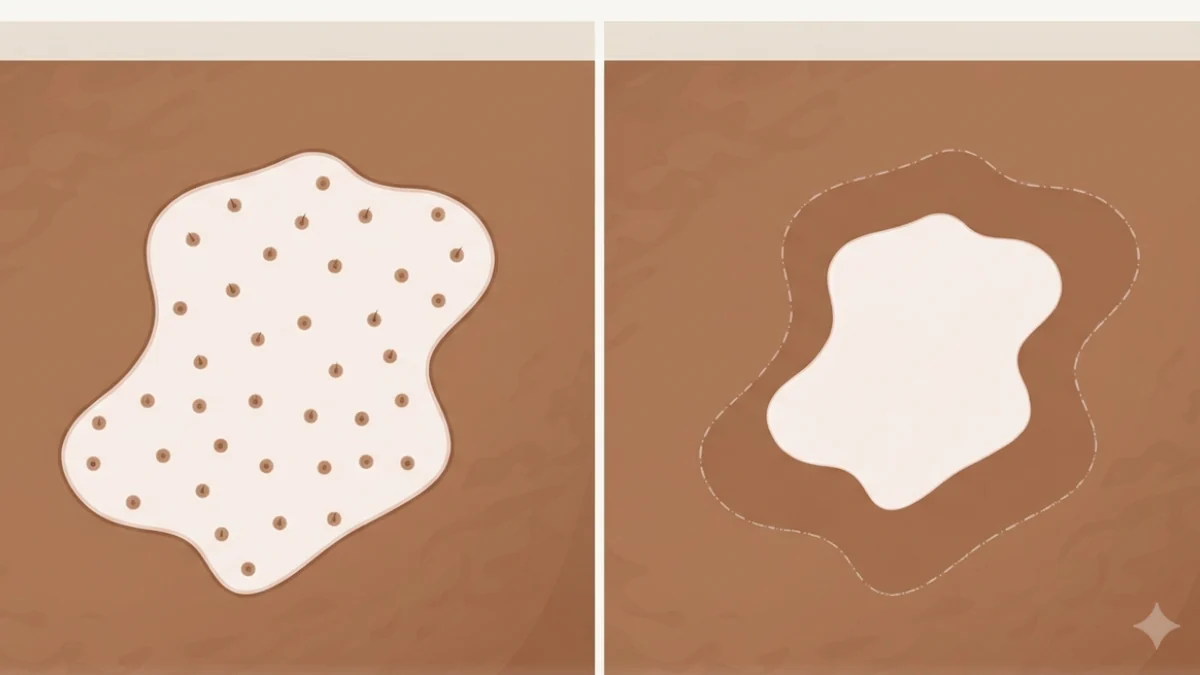
Please bring photographs
This is the most useful thing a patient can bring to a vitiligo follow-up, and it costs nothing.
Photograph your patches about once a month. Same light, same distance, same angle as far as you can manage.
Memory is unreliable over months. Photographs are not. With them, I can compare directly rather than both of us estimating.
The same treatment behaves differently on different sites
This surprises people, and it is a common reason for wrongly concluding that treatment has failed.
Tend to respond better: face, neck, trunk. These areas have more hair follicles, and melanocytes are concentrated in hair follicles, from which they can move out into the surrounding skin.
Tend to respond more slowly: fingertips, backs of the hands, soles, and the area around the lips. Fewer follicles to draw from.
So the face may fill in while the fingertips change little, on the same treatment. Judging the whole treatment by its slowest site is not a fair test of it. These are tendencies, not guarantees. Individual response varies.
Treatment has to be regular to be judged
Vitiligo treatment often runs a long time, and gaps are common and human. The cream is forgotten. A phototherapy session is missed. Travel interrupts the medicines.
If treatment has been irregular, it is not reasonable to expect a full response from it.
Tell your dermatologist rather than stopping. If a regimen is too difficult to follow, it can often be simplified. A simpler plan you actually follow is better than an ideal plan you cannot.
Avoid unnecessary injury to the skin
In some patients, when disease is active, patches can appear at sites of injury or repeated friction — the Koebner phenomenon. It does not happen in everyone, but while disease is active it is sensible to avoid unnecessary trauma to the skin.
So how is adequacy judged?
Three things, together:
- Disease activity — are patches stable, are new ones appearing?
- Repigmentation — is colour returning, including early follicular dots and edge pigment?
- Time and consistency — how long has treatment run, and has it been regular?
No single one of these decides it.
When treatment genuinely does need to change
Everything above argues for patience. The opposite mistake is real too.
If treatment has been regular, has continued for an adequate period, and there is no change in activity or pigmentation — then the treatment does need reviewing.
Patients differ in how much treatment they need. Some are controlled with creams. Some need phototherapy. Some need oral medicines. Part of the purpose of follow-up is to judge whether what you are on is enough for your disease.
Sometimes the question is the diagnosis
Not every white patch is vitiligo. Pityriasis alba, post-inflammatory hypopigmentation and some fungal infections can look similar.
If a patch looks unusual, or the response is far from what was expected, re-examining the diagnosis is sometimes the right step rather than escalating treatment.
When to seek review sooner
- Rapid appearance of several new patches
- Patches spreading quickly after a period of stability
- Redness, itching, scaling or soreness in a patch
- Skin thinning, visible small blood vessels or stretch marks where a steroid cream has been applied
- Any new symptom you think may be from an oral medicine
- You are struggling emotionally with the condition
If you remember one thing
Controlling disease activity and bringing back colour are two different goals, judged differently, and usually on different timescales.
Do not judge from a single new patch. Compare your old photographs with recent ones, and bring both to your next consultation.
Frequently asked questions
How long before I see results in vitiligo treatment?
Visible repigmentation usually takes months rather than weeks, and varies by site and treatment. Judging at two or three weeks is too early.
A new patch appeared after I started treatment. Should I change the medicine?
Not on that alone. Disease activity takes time to settle. Report it at your review rather than stopping treatment.
What are the first signs that vitiligo treatment is working?
Often small dots of pigment around hair follicles inside the patch, or colour appearing at the patch edge. Both are easy to miss without photographs.
Why is colour returning on my face but not my fingers?
Sites with more hair follicles tend to repigment better. Fingertips and soles have fewer and generally respond more slowly.
Should I change my doctor if treatment is slow?
Changing frequently tends to delay things, since each dermatologist restarts their assessment. Raise the concern with your current doctor first.
Is it worth photographing my patches?
Yes. A monthly photograph in consistent light is the single most useful thing to bring to a vitiligo follow-up.
Author: Dr Sachin Gupta, MBBS, MD Dermatology (AIIMS New Delhi), DNB DVL, MNAMS.
Written and medically reviewed by Dr Sachin Gupta. Last reviewed 26 November 2026.
Images in this article are illustrations prepared for patient education. They are not photographs of patients.
Reference: Eleftheriadou V, et al. British Association of Dermatologists guidelines for the management of people with vitiligo 2021. British Journal of Dermatology. doi:10.1111/bjd.20596