
Introduction
Numbness in leprosy is one of the most common concerns patients have. Many people notice that even after completing treatment, numbness or weakness in hands and feet does not improve.
So, the big question is: Will numbness in leprosy go away or not?
In this article, Dr Sachin Gupta, dermatologist, explains the real reason behind numbness, nerve damage in leprosy, and what you can expect from treatment in a simple way.
What Happens in Leprosy and Numbness
Leprosy is a bacterial disease caused by Mycobacterium leprae. It mainly affects the skin and nerves.
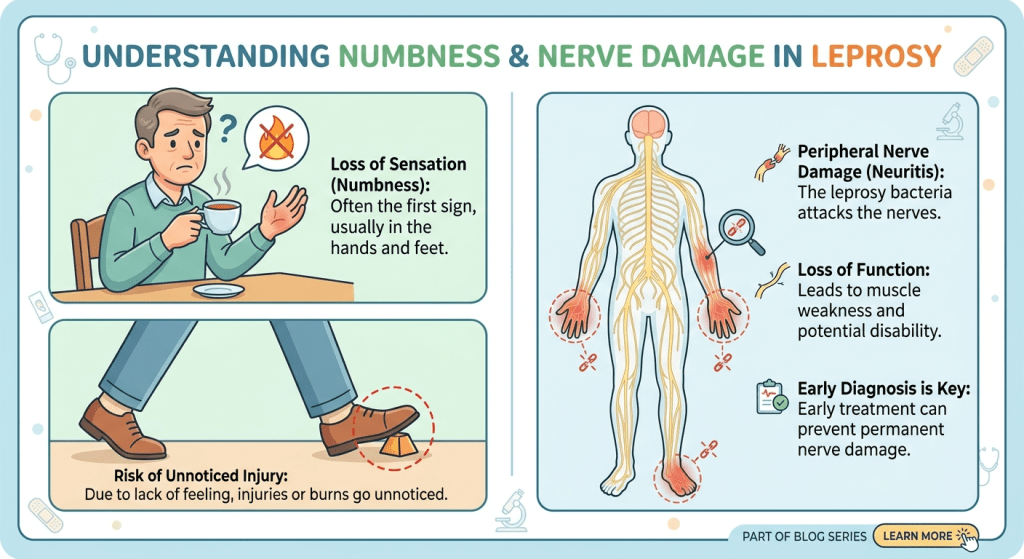
Nerves help us feel touch, temperature, and pain. When these nerves get affected, their function reduces, and numbness begins.
Moreover, the bacteria enter nerve cells and cause inflammation and swelling. Over time, these nerve cells get damaged and stop working properly. As a result, loss of sensation occurs.
Leprosy Symptoms and Numbness
Leprosy symptoms and numbness usually develop gradually. In most cases, patients notice the following signs:
- Loss of sensation in skin patches
- Numbness in hands or feet
- Muscle weakness
- Wrist drop (difficulty lifting the hand)
- Foot drop (difficulty lifting the foot)
- Eyelid weakness
Therefore, these symptoms clearly indicate nerve damage in leprosy and should not be ignored.
Why Nerve Damage in Leprosy Occurs
There are two main reasons for nerve damage in leprosy:
1. Direct Bacterial Damage
First, the bacteria directly attack the nerves and gradually destroy them.
2. Immune Reaction (Leprosy Reaction)
On the other hand, the body’s immune system sometimes becomes overactive. As a result, inflammation and swelling occur. This swelling compresses the nerves and leads to numbness or even paralysis.
Because of this, patients may suddenly feel worsening symptoms even during treatment.
Will Numbness in Leprosy Go Away?
The answer mainly depends on how early treatment starts.
If Treatment Starts Early
- Nerve damage remains mild
- Numbness can improve
- Recovery is possible
If Treatment is Delayed
- Nerve damage becomes severe
- Numbness may become permanent
- Nerve recovery becomes difficult
So, early diagnosis plays the most important role.
MDT Treatment for Leprosy (Important Role)
MDT treatment for leprosy (Multi Drug Therapy) is the standard treatment used worldwide.
What MDT Does:
- Kills bacteria completely
- Stops disease progression
- Prevents further nerve damage
However, MDT treatment for leprosy cannot always reverse existing nerve damage. Therefore, starting treatment early is very important.
Important Warning – Do Not Stop Treatment
Many patients stop treatment because they do not see immediate improvement. However, this is a mistake.
Even if you do not feel better, the treatment is still working internally. In fact, MDT continues to kill bacteria inside the body.
So, stopping treatment early can worsen the disease and increase nerve damage.
Treatment for Numbness in Leprosy
If nerve damage is present, doctors use additional treatments.
1. Steroid Treatment
Doctors use medicines like prednisolone to reduce inflammation and improve nerve function.
2. Local Steroid Injections
In some cases, doctors inject steroids near the affected nerve to reduce swelling.
3. Surgery (Nerve Decompression)
If swelling becomes severe, surgeons relieve pressure on the nerve through surgery.
4. Reconstructive Surgery
After completing treatment, doctors may correct permanent deformities such as:
- Clawed fingers
- Wrist drop
- Foot drop
- Facial nerve problems
These procedures significantly improve function.
5. Physiotherapy
In addition, physiotherapy plays a very important role. It helps:
- Strengthen muscles
- Improve movement
- Prevent stiffness
When to Visit a Dermatologist for Leprosy
You should consult a dermatologist for leprosy if you notice:
- Persistent numbness
- Loss of sensation in skin patches
- Weakness in hands or feet
- Sudden worsening of symptoms
Most importantly, early consultation helps prevent permanent nerve damage.
Conclusion
Numbness in leprosy is not always permanent. If treatment starts early, recovery is possible. However, delayed treatment can lead to permanent nerve damage.
Therefore, MDT treatment for leprosy should never be stopped. Along with this, steroids, surgery, and physiotherapy can significantly improve quality of life.
FAQ
Can numbness in leprosy be cured?
Yes, it can improve if treatment starts early. However, severe nerve damage may not fully recover.
How long does numbness last in leprosy?
It depends on severity. Mild cases improve over time, while severe cases may be long-term.
Does MDT treatment cure nerve damage?
MDT kills bacteria, but it may not fully reverse existing nerve damage.
Should I see a dermatologist for leprosy?
Yes, a dermatologist for leprosy ensures proper diagnosis and treatment.
About the Author – Dr Sachin Gupta
Dr Sachin Gupta is a dermatologist experienced in treating skin and nerve-related diseases, including leprosy. He focuses on early diagnosis, MDT treatment, and prevention of complications.