
Introduction
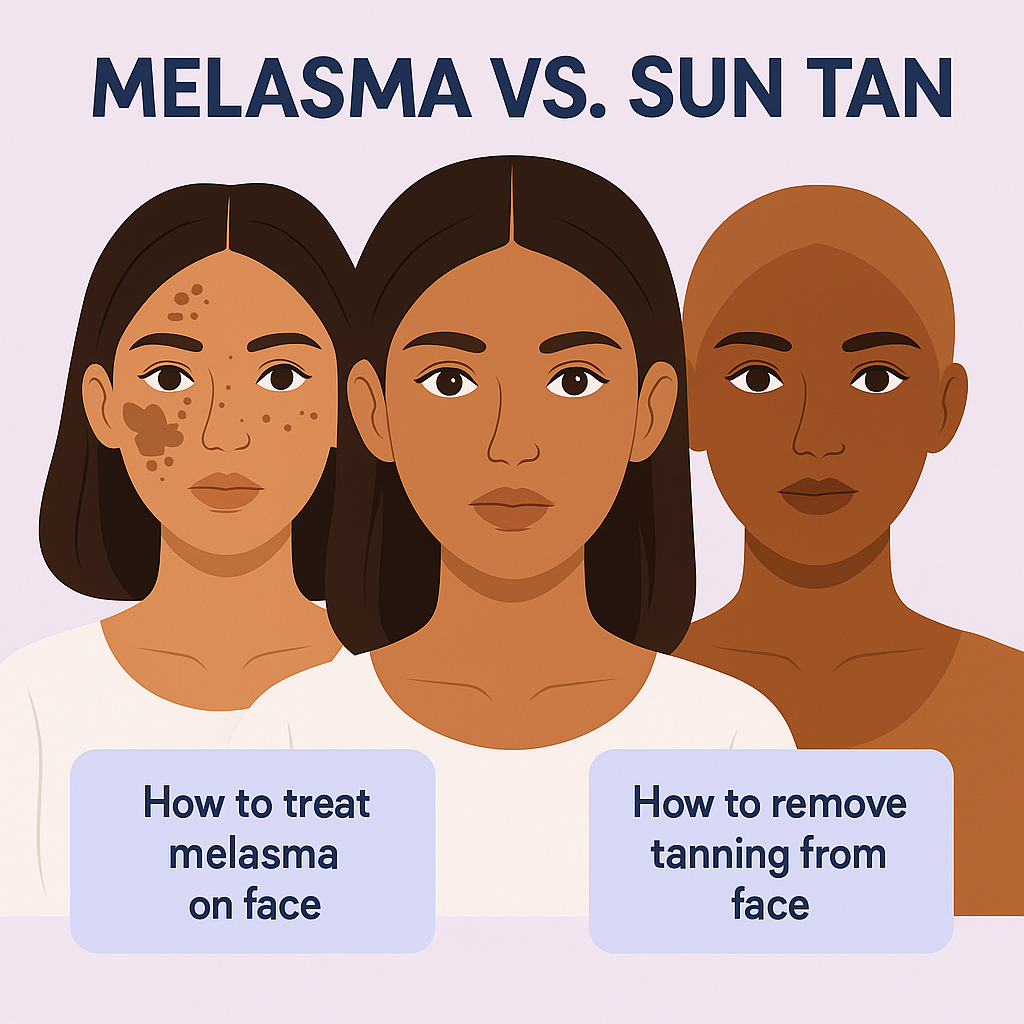
Do you have dark patches on your face and aren’t sure whether it’s melasma or just tanning? You’re not alone. Many people confuse these two common pigmentation problems. But the causes, treatments, and outcomes are very different.
Many women dealing with melasma also struggle with adult acne. Read this blog on adult acne treatment to understand hormonal skin changes.
In this blog, we’ll help you understand the difference between melasma and tan, how to identify them, and most importantly, how to treat melasma on the face and how to remove tanning safely.
What is Tanning?
Tanning is your skin’s natural reaction to UV radiation from the sun. It causes the skin to darken uniformly, especially on the forehead, arms, neck, and exposed areas. This is usually temporary and fades in a few weeks.
Tanning is more common in summers and after vacations, and it usually doesn’t require aggressive treatment.
What is Melasma?
Melasma is a chronic skin condition that appears as patchy, brown or greyish pigmentation, typically on the cheeks, forehead, nose, or upper lip. It is more common in women and is triggered by sun exposure, hormonal changes (like pregnancy or birth control pills), and genetics.
Unlike tanning, melasma tends to persist and needs long-term treatment and sun protection.
How to Differentiate Melasma and Tan
Here’s a simple comparison to help you tell the difference:
| Feature | Tanning | Melasma |
| Duration | Short-term (weeks) | Chronic (months/years) |
| Cause | Sun exposure | Hormones + sun + genetics |
| Pattern | Diffuse darkening | Patchy, symmetrical spots |
| Affected Area | Exposed skin areas | Forehead, cheeks, upper lip |
| Treatment | Fades naturally or with mild creams | Needs consistent dermatologist-guided care |
How to Remove Tanning from the Face
If you’ve recently returned from a beach vacation or have been out in the sun, you may be dealing with a tan. Here’s how to safely remove tanning:
– Use a broad-spectrum sunscreen daily with SPF 30 or more.
– Include vitamin C serum and gentle exfoliants (like lactic acid or AHA-based cleansers).
– Avoid scrubbing aggressively — this can worsen pigmentation.
– You can also try mild chemical peels (done under dermatological supervision) for faster results.
Sunscreen is your first line of defense for both tanning and melasma. Here’s how to choose the right SPF for your skin.
How to Treat Melasma on the Face
Melasma requires a combination of patience, medical-grade products, and professional guidance. Here’s what works:
– Daily use of broad-spectrum sunscreen (even indoors).
– Topical creams like azelaic acid, kojic acid, arbutin, or retinoids (as prescribed).
– Procedures like chemical peels, tranexamic acid, or laser treatments (only under a dermatologist’s care).
– Strict sun protection and lifestyle changes to avoid triggers.
For detailed information on dermatologist-recommended melasma treatments, you can also refer to the American Academy of Dermatology’s official guide on melasma treatment.
Do not use over-the-counter fairness creams — especially ones containing steroids — as they often worsen melasma.
Dr. Sachin Explains
“Many patients come to me after trying all sorts of creams from local stores. The key with melasma is early diagnosis, consistent sun protection, and prescription-based care. The more you delay, the deeper the pigmentation gets — making it harder to treat.”
Frequently Asked Questions
Q1. How long does melasma take to fade?
Melasma can take several weeks to months to improve. It usually needs long-term maintenance.
Q2. Can men get melasma?
Yes, though less common, men can also develop melasma, especially due to sun exposure and genetics.
Q3. Can I treat both melasma and tan together?
Yes, but it’s important to identify the cause. A dermatologist can tailor your treatment accordingly.
Post-acne marks are often mistaken for melasma or tanning. Learn why popping pimples worsens scars and pigmentation.
Conclusion
Melasma and tanning may look similar at first, but their causes and treatment are very different. If you’re unsure, it’s best to consult a dermatologist. Whether you want to know how to remove tanning or how to treat melasma on the face, professional guidance will help you avoid mistakes and get better results.
About Dr. Sachin Gupta
Dr. Sachin Gupta (MBBS, MD Dermatology – AIIMS Delhi) is a trusted dermatologist in Faridabad, with years of experience treating complex pigmentation concerns like melasma, tanning, and post-acne marks. His approach combines scientific accuracy, ethical treatment, and patient-centered care.
ALSO READ
Understand sunscreen use and skin protection
Learn about acne treatment and skin care
Read about MIP vaccine for leprosy and prevention
Consult a dermatologist in Faridabad for proper diagnosis
If you’re in Faridabad or nearby areas and are struggling with melasma or tanning, book a consultation today with Dr. Sachin Gupta at amrita hospital.